
Instagram hooks are the first line of a caption or the first 2 seconds of a reel. Their only job is to make the right person stop scrolling.
Most advice on the subject hands you 100 interchangeable lines. Then it leaves you to work out which one belongs to a business that sells a service.
The problem is, a line built to pull 40,000 strangers works differently from a line built to pull 40 buyers.
So here are 6 opening lines written for a one person service business. You also get the numbers that tell you whether one worked, and the point where the first line stops being the thing holding you back.
Short answer: A hook has worked when the person who could hire you stops and the rest keep going. Open with the mistake your buyer is making, their job title, a number you can prove, or your price. Then check saves and profile visits. Views on their own will not tell you whether a buyer saw it.
Key takeaways
- A hook has one job, which is to stop the one person who could hire you. Reaching 40,000 of the wrong people is still a miss.
- The strongest opening lines describe the buyer’s problem in the buyer’s own words. You already have those words from the work you have done.
- Put your buyer’s job title in the first few words, so the wrong readers scroll on and the right ones stay.
- A figure you can prove does more work than any adjective, and a result you produced inside a company counts.
- Views say the line stopped people. Saves and profile visits say a buyer saw it, so check those before you judge a post.
- A better hook cannot fix an offer buyers do not want. If 20 posts pull attention and bring no inquiries, change the offer.
A Hook That Pulls Strangers Can Still Bring You No Clients
Every guide on social media hooks agrees on the same handful of points. Keep it short, be specific, say who it is for, and deliver what you promised.
Fair enough. That is 5 articles telling you the same 4 things.
Here is what none of them tells you: an opening line is a filter as much as an invitation. The line that stops the most people is usually the vaguest one. A vague line fits every reader a little and no reader exactly.
You want the people who run the kind of business you fix. The rest are traffic.
There is research behind that. A study of 584 short video users in Information & Management found people keep watching when a video feels informative and personal to them specifically. Relevance does the work.
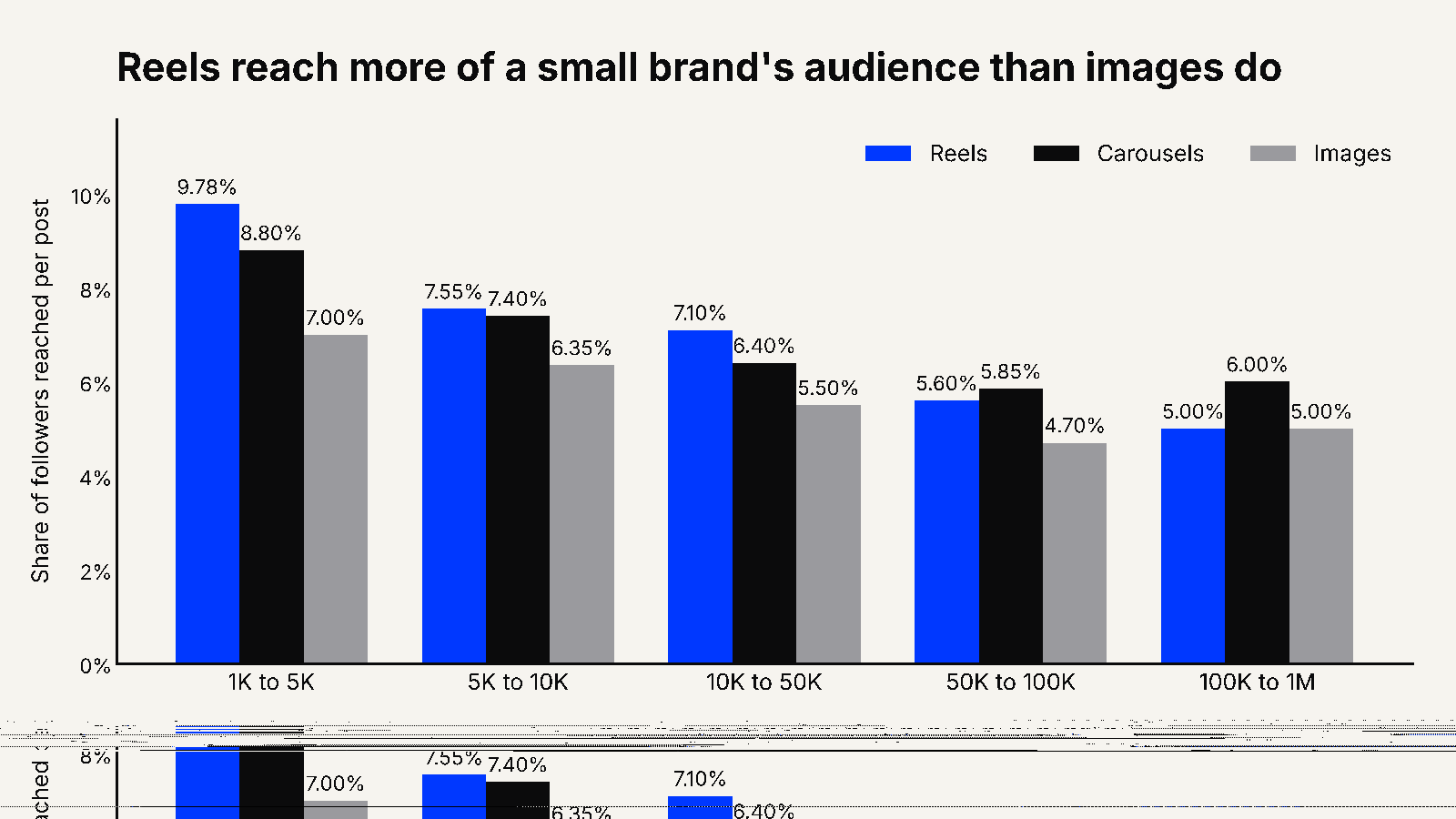
Reels are where those first 2 seconds carry the most weight, and a small account gets the most out of them. Socialinsider analyzed 9,771,822 Instagram reels from brands between 1,000 and 1 million followers over January to June 2026. Brands with 1,000 to 5,000 followers reached 9.78% of their audience with a reel and 7.00% with a still image. Those figures cover brands worldwide, so they hold wherever you post from.
Each Hook Below Opens With Something Your Buyer Recognizes
1. Describe The Mistake Your Buyer Is Already Making
Describe what your buyer is doing wrong before you describe what you sell.
The hook
“You are charging by the hour and that is why your quote scares people.”
A web designer would open with this when buyers keep comparing quotes on price.
It works because it reads as a diagnosis, and a diagnosis implies a specialist who can treat it. The reader is never told you are good at this. They work it out, which is far more convincing.
Think of the last 3 problems you fixed in your work, inside a company or on your own. Write each one as a sentence the person with the problem would say out loud. Put the first at the top of your next reel.
2. Put Your Buyer’s Job Title In The First 4 Words
Saying the audience out loud does 2 things at once. The right reader feels spoken to. The wrong reader leaves, which is the part most people resist.
The hook
“Clinic owners, the gaps in your calendar start at the front desk.”
A practice consultant gets the filtering done by the job title alone.
Nicola Washington writes the newsletter Too Much and teaches writers how to post. She builds her hooks the same way, and keeps them short.
“A short and catchy phrase works best.”
Nicola Washington, A Writer’s Guide To Writing Hooks For Instagram Posts
Losing the wrong readers feels like losing, and it is the whole point. A post seen by 300 clinic owners beats a post seen by 9,000 people who will never hire a consultant.
Write down the job title your buyer actually uses, the one on their own profile. Open your next 5 posts with it.
3. Open With A Number You Can Prove
An adjective asks the reader to take your word for it. A figure gives them something to picture.
The hook
“A 90 second change to one booking form took a clinic from 4 appointments a week to 11.”
Any service business with 1 result it can still attach a number to has this line already.
The figure does not have to come from a client of your own. A result you produced inside a company counts, and so does work you did for free. Years of good work in a job leave you plenty to point at, even when no outside invoice carries your name yet.
What you cannot do is invent one. A figure you cannot explain in the comments does more damage than posting nothing.
Go back through the last 2 years of your work. List every result you can still attach a number to, and lead your next post with the best one.
Recommended next step
Know What To Post Before You Write The First Line
A hook only opens the post. What you make, how often, and what moves a viewer into your inbox is the system underneath, and that is How to Create Social Media Content That Sells for Solo Founders.
4. Answer The Question People Keep Bringing You
The questions you get asked are already written in your buyer’s language. That saves you the hardest part of the job.
The hook
“No, you do not need a rebrand before you raise your prices.”
A pricing or brand consultant answers a question buyers keep asking.
Starting with a flat “no” is the move. A straight answer to a question the reader has been carrying around is satisfying in a way a tip never is.
These questions do not have to come from paying clients. A colleague’s question counts. So does one you saw in a forum your buyers read, and the one you answered 40 times inside a job.
Write down the last 5 questions you were asked about your work, and answer 1 per post.
5. Put The Price In The First Line
Very few service businesses open with money, which is exactly why it stops people.
The hook
“What a 4 page website costs, and the 3 things that push the price up.”
Any service business willing to publish a price range can run this.
A price hook filters harder than any other line here. Browsers leave. The readers who stay have just told themselves they can afford it, and those are the only readers worth reaching.
You do not need a fixed price for this - a range with the reasons it moves works just as well. Writing it down is often the first time a solo business settles what it charges.
Pick 1 thing you sell. Write its range and the 3 things that move it, then open a post with that line.

6. Call Out What Your Buyer Will Not Admit
Every field has a problem people have and do not say out loud.
The hook
“Your website has been ‘almost ready’ for 14 months.”
A web designer or developer blames the situation here, never the person.
Saying it is the whole hook. The reader feels caught. Being caught kindly by a specialist who fixes this for a living is a short path to a message in your inbox.
The line between this and insulting your reader is thin. The test is whether you describe the situation or the person. Write “your pricing page confuses people” and leave “you are bad at pricing” alone.
Write the thing your buyers avoid admitting, in a sentence that blames the situation. Use it once this week.
Check Which Instagram Hooks Actually Brought Inquiries
A hook that works shows up in your numbers long before it shows up in your inbox. The useful numbers sit behind the ones on the front of the post.
Instagram says its system predicts “how likely you are to reshare a reel, watch a reel all the way through, like it”. Resharing comes first in that sentence, which tells you what the platform weights most heavily. The full breakdown is in Instagram’s ranking explainer.
The split that matters is between numbers saying your line stopped people and numbers saying it stopped the right people.
| What to check | Where to find it | What it tells you |
|---|---|---|
| Views in the first hour | Post insights | Whether the first line stopped a single person |
| Average watch time | Post insights, under Views | Whether the opening line matched what came after it |
| Saves | Post insights | A reader intends to come back, the closest free signal to intent |
| Shares and sends | Post insights | A reader thought of 1 specific person, often your buyer’s colleague |
| Profile visits from the post | Post insights | A viewer went looking for who you are and what you sell |
| Inquiries over the following week | Your inbox | The only number that pays |
Run the same idea twice with 2 different opening lines a few days apart. Then compare average watch time and profile visits. That one comparison beats any list of templates, this one included.
There is also a point where the posting is fine and the business underneath it is the problem. If you have years of expertise and nothing earning from it yet, we spend 8 weeks working with you one on one on the direction, the offer, the price and a plan for reaching your buyers. It runs alongside everything else your week already holds. You do not need a sabbatical, a career break or a gap in your income to start. That is Plan A, and applications are open.
A Better Hook Cannot Fix An Offer Buyers Do Not Want
Here is when to stop working on opening lines.
If 20 posts in a row pull attention and produce no inquiries, the first line is doing its job and something behind it is broken.
There are 2 usual causes. Either the offer is vague, so a reader who liked the post cannot work out what to ask you for - or the offer is clear and the wrong readers are stopping, which sends you back to who you address in that first line.
A third possibility is worth saying out loud. Instagram suits some businesses and not others. A consultant selling to procurement teams at large companies will get further with 20 conversations than with 200 posts.
Writing a good first line is a skill worth having - it is also the cheapest piece of the work, and the cheapest piece is rarely the one holding you back.
Where Posting On Your Own Usually Stalls
Rewriting one opening line is something you can do today. Working out what to post, who to post it for, and what turns a viewer into a paying client is where most solo founders stall. That is the step we built these around.
Recommended next step
Post With A System That Turns Viewers Into Buyers
You get the posting system a one person service business runs on: what to make, how often, how to open it, and how a viewer becomes an inquiry. That is How to Create Social Media Content That Sells for Solo Founders, $199 as an instant download.
Get The Business Chosen, Set Up And Earning In 8 Weeks
If you have years of expertise and no business running on it yet, the opening line is not your first problem. We work with you one on one for 8 weeks on the direction you commit to, the business set up correctly underneath it, the offer and the price, and a plan for reaching the buyers you picked. It is application based and it costs $3,800, or 4 monthly payments of $995. That is Plan A.
Work Out What You Should Build, In 60 Minutes
If you cannot yet say which of your directions to build, an opening line is the wrong thing to be working on. Every week we run a free 60 minute workshop on Zoom, 40 minutes of method and 20 of questions. You leave with 1 direction and the reasons it beat the others, and a few attendees get their own list narrowed down live. Come to The Shortlist to choose the direction, then make it work in the 8 week program above.